The basics
American Mahjong Tiles: A Guide to All 152
An American Mahjong set has 152 tiles: three suits numbered 1 to 9, four winds and three dragons, with four of each of those tiles, plus eight flowers and eight jokers. Here’s every tile, what it does, and what to check before you buy a set.
How many tiles are in an American Mahjong set?
An American Mahjong set has 152 tiles. The artwork changes from set to set, but the standard game always uses these same 152. They come in three kinds: suit tiles, winds and dragons, and flowers and jokers.
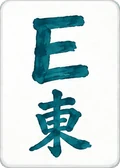
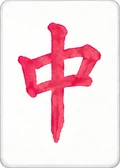
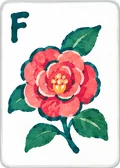
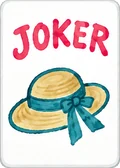
| Family | What’s in it | Tiles |
|---|---|---|
| Bams | 1 to 9, four of each | 36 |
| Craks | 1 to 9, four of each | 36 |
| Dots | 1 to 9, four of each | 36 |
| Winds | North, East, West, South, four of each | 16 |
| Dragons | Red, green and white, four of each | 12 |
| Flowers | Eight, each with its own picture | 8 |
| Jokers | The wild tiles | 8 |
| Total | 152 |
The quick sum: 108 suit tiles, plus 28 winds and dragons, plus 16 flowers and jokers, makes 152.
The three suits: Bams, Craks and Dots
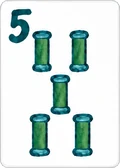
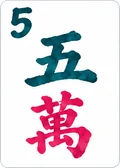
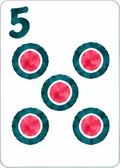
Most of the set is made of three suits. A suit is a family of numbered tiles. Each one runs from 1 to 9, and there are four of every tile, so each suit has 36. On a suit tile, the number is what counts, not the picture.
Bams
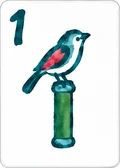
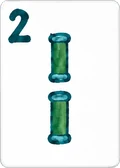
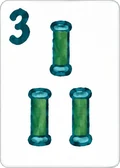
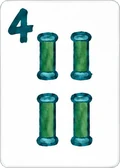
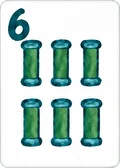
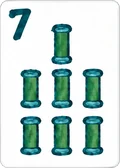
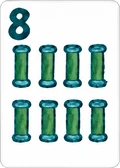
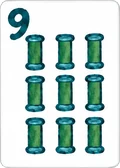
Bams show bamboo sticks. The 1 Bam is usually a bird, which is why players call it the bird Bam. It’s still a 1.
Craks
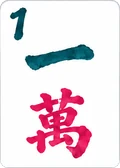
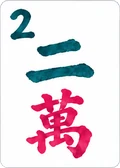
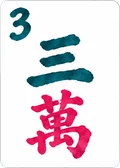
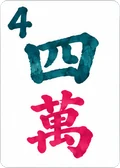
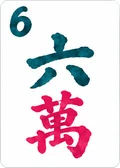
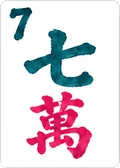
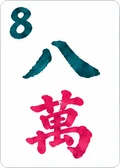
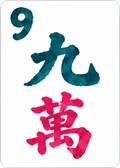
Craks are the character suit. Their tiles carry Chinese character symbols, and you read them by their number.
Dots

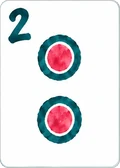
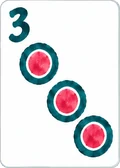
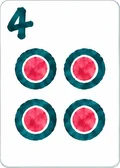
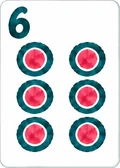
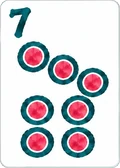
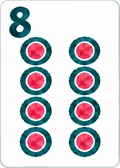
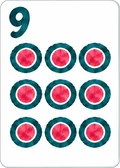
Dots show circles. Count the circles to read the number.
Players say a tile’s number first, then its suit: “5 Crak”, “7 Dot”, “1 Bam”. You’ll hear this every time someone names a discard.
What are the winds and dragons in mahjong?
Four winds
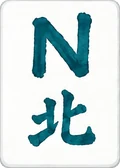
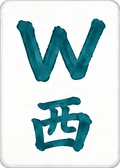
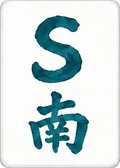
There are four winds, North, East, West and South, with four of each. Winds have no numbers and belong to no suit. On the card, the list of winning hands that comes out each year, they’re written N, E, W and S. Each hand on the card is called a line. A line that asks for one of each wind writes it as NEWS.
Three dragons
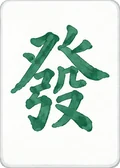
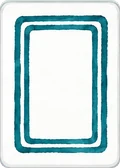
There are three dragons, with four of each. Every dragon belongs to a suit, and you’ll use this pairing when you read the card.
| Dragon | Goes with | Nickname |
|---|---|---|
| Red | Craks | |
| Green | Bams | |
| White | Dots | Soap |
A line’s dragons can match its numbers, or come from a different suit. When a line’s note says any dragon, any of the three will do.
Soap can be a zero
The white dragon is nicknamed Soap. Some lines on the card are built on the year’s digits, and they use Soap as a zero. As a zero it belongs to no suit, so it doesn’t turn a line into Dots. As a dragon, it still goes with Dots.
There’s more on dragons and colors in how to read a mahjong card.
Do mahjong flower tiles have to match?
No. A set has eight flowers, each with a different picture. In American Mahjong they all count as the same tile, so any flower matches any other. Two flowers with different pictures still make a pair.
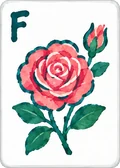
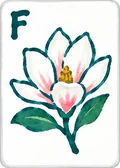
Flowers have no suit. On the card a flower is written F, so FF means a pair of flowers. Some sets print numbers on their flowers. In American Mahjong those numbers don’t matter.
Because there are eight of them, flowers work a little differently in bigger groups:
- Five of a kind is called a quint. A quint of flowers needs no joker. Any other quint needs at least one, because there are only four of every other tile.
- Six of a kind is a sextet. You’ll mostly see it with flowers.
- Jokers can still stand in for flowers in a group of three or more.
How many jokers are in American Mahjong?
There are eight jokers in a standard set. A joker is wild: it can stand in for any tile in a group of three or more of the same tile. That means a pung (three of a kind), a kong (four), a quint (five) or a sextet (six).
Jokers have limits. They can never be part of a pair, and they can’t stand in for a single tile. So there are no jokers in a run like 1 2 3, and none in NEWS. If a line has single tiles, you need the real ones.
A few more joker rules every player should know:
- A quint needs a joker. There are only four of each tile, so five of a kind always takes at least one. Flowers are the exception.
- Jokers can’t be passed. Not in the Charleston, the tile trade before play starts, and not in the courtesy pass, the swap of up to three tiles with the player across that can follow it.
- A discarded joker is dead. You may throw one away, but no one can call it, that is, take it from the table for their own hand.
- You can trade for an exposed joker. An exposed group is one laid face up after a call. On your turn, after you draw or call and before you discard, give the exact tile the joker stands for and take the joker. Any player’s group counts, your own included, and no one can refuse.
The full details are in our American Mahjong joker rules guide.
How the tiles come together in a hand
Before each hand, all 152 tiles are turned face down, mixed and stacked into a wall. At a real table, each player builds a wall of 19 stacks, two tiles high, and the four walls hold the whole set. Everyone takes 13 tiles. The dealer, called East, takes 14 and starts by throwing one away.

The goal is to be the first to hold 14 tiles that match one line on this year’s card. A line is one winning hand, written in numbers and letters. Here’s a finished hand from our lessons:
Look at the dragons. They’re green because this line asks for dragons that match its suit, and green goes with Bams, the pairing from the table above. For the whole game, start with how to play American Mahjong.
In Mahj Call the wall is built and dealt for you, so you can learn the tiles by playing them.
How is an American Mahjong set different from a Chinese set?
Mahjong is played in many styles, and the sets aren’t all the same. A set made for another style of mahjong may not be ready for American play. The differences come down to a few things:
- Jokers. American Mahjong needs eight. A set made for another style may have none.
- Flowers. American Mahjong uses eight, and any flower matches any other. Another style’s set may have fewer, and any numbers printed on them don’t matter here.
- The card. American players build toward a line on a card of hands that changes every year, and every line is made from the 152 tiles above.
Vintage sets need the same check. A lovely old set may be short of jokers or flowers. If a set has every tile in the table at the top of this page, in those numbers, it’s ready.
What to look for when you buy a mahjong set
You don’t need a fancy set to play well. Check these things first:
- It’s made for American Mahjong. Look for eight jokers and eight flowers, and 152 tiles in all.
- 160 tiles is fine. Some sets come with 160: the 152, plus two extra jokers and six blank tiles. For standard play, set aside the two extra jokers and all six blanks. Some tables play with all 160, but that’s a house rule, so ask first.
- Tiles you can read at a glance. Artwork varies a lot, from traditional sets to themed ones. The tiles still mean the same thing, so choose faces you can read easily from across a table.
- Four racks. You keep your tiles on a rack, with the private side facing you. Pushers, the hinged arms on some racks, are handy but not required.
- Dice and this year’s card. Tables roll dice to decide where the deal starts in the wall, and sometimes to choose East. Every player needs this year’s card, and it’s normal to ask guests to bring their own.
When your set arrives, count it against the table at the top of this page. If you sit down with a set you don’t know, look through it before the game starts.
Hosting your first game? Read how to host a mahjong night. Or play with someone else’s set first: find a table near you.
Questions
How many tiles are in an American Mahjong set?
152. There are three suits, Bams, Craks and Dots, numbered 1 to 9 with four of each, for 108 tiles. Add four winds and three dragons with four of each, for 28 more, then eight flowers and eight jokers. Some sets come with 160 tiles, adding two extra jokers and six blanks that standard play sets aside.
How many jokers are in an American Mahjong set?
Eight. A joker is wild in any group of three or more of the same tile, like a pung (three of a kind) or a kong (four). It can never be part of a pair, a single tile or a run. Some sets include two extra jokers. For standard play, set those aside and play with eight.
What is the Soap tile in mahjong?
Soap is the nickname for the white dragon. As a dragon it goes with Dots, just as red goes with Craks and green goes with Bams. Lines built on the year’s digits also use Soap as a zero, and as a zero it belongs to no suit, so it doesn’t make a line Dots.
Do mahjong flower tiles have to match?
No. A set has eight flowers with different pictures, and in American Mahjong any flower matches any other. Two different flowers make a pair. Because there are eight, a quint of five flowers needs no joker, unlike a quint of any other tile, and jokers can stand in for flowers in groups of three or more.
Can you play American Mahjong with a Chinese mahjong set?
Only if it has every tile the American game uses: 152 in all, including eight jokers and eight flowers. A set made for another style of mahjong may have no jokers, or too few flowers. Count the jokers and flowers before you buy a set, or before you plan a game with one.
What are the blank tiles in a mahjong set for?
Blank tiles aren’t part of the standard 152-tile game. Some sets come with 160 tiles, adding six blanks and two extra jokers. Some tables play with them as a house rule, and how they’re used varies, so ask before you play. For standard play, set the blanks and the extra jokers aside.