Play together
How to host a mahjong night
To host a mahjong night, invite players in groups of four, set out one tile set, four racks and a card for every player, and agree your house rules before the first deal. Here’s the rest, from teaching new players to running a weekly open play.
How many players do you need for a mahjong night?
American Mahjong is a game for four players, so plan your night in tables of four. Each table needs its own set of tiles. The number of sets you can gather often decides how many people you can invite.
- 4 guests: one table, one set. The easiest first night.
- 8 guests: two tables. Put one confident player at each.
- 12 or more: you’re running a small open play.
Numbers rarely come out even. If a table ends up with three or two, our guide to three- and two-player mahjong covers how to play. With five, many groups have one person sit out each hand and rotate in, but house rules vary. Say how you’ll handle it before you start.
What do you need to host a mahjong night?
Set each table up before anyone arrives. Here’s the checklist for one table of four.
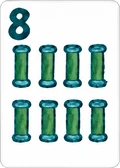
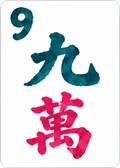
- One mahjong set. American Mahjong uses 152 tiles: three suits numbered 1 to 9, four winds, three dragons, eight flowers and eight jokers. Some newer sets add blanks and two extra jokers. Using those is a house rule, so decide before you play.
- Four racks. Each player keeps their tiles on a rack facing them, so only they can see their hand.
- Pushers, if your racks have them. A pusher is the long arm on a rack that helps slide your part of the wall (the face-down rows everyone draws from) toward the middle. Handy, not required.
- A card for every player. The card lists the hands you’re allowed to win with, and a new one comes out every year. Everyone needs this year’s, not last year’s, and it’s normal to ask guests to bring their own. The card is published by the National Mah Jongg League. Mahj Call is independent and isn’t affiliated with the League.
- A square table and four chairs. A card table works. Good light matters more than you’d think, because the tiles are small.
- A side table for food and drinks, so nothing lands on the tiles.

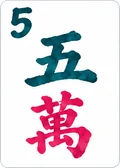
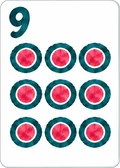
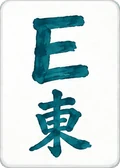
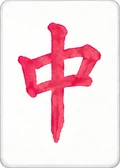
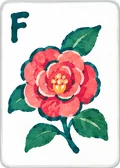

Count the jokers and flowers in each set before guests arrive. A standard 152-tile set has eight of each.
How do you teach mahjong to new players?
New players learn fastest when they arrive knowing the tiles. Give them a little homework, then keep the first night slow.
Homework before the night
Ask newcomers to play the guided first game in Mahj Call before they come. It walks them through a short hand all the way to Mahjong, one step at a time, with a coach beside them. The short lessons cover the tiles, the card, the Charleston and calling. A player who has done both sits down knowing what a pung is (three of the same tile) and why everyone is passing tiles.
The first hour at the table
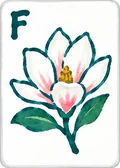
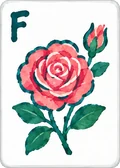
- Sort a set together. Lay out the three suits (Bams, Craks and Dots), the winds, the dragons, the flowers and the jokers. Point out that any flower matches any other.
- Show the goal. You win by being first to hold 14 tiles that match one line on the card. Between turns you hold 13. Our guide to reading a mahjong card explains the notation.
- Walk through the Charleston once. The Charleston is the tile trade before play starts. Everyone passes three tiles right, then across, then left, and never a joker. See the Charleston, step by step.
- Play a practice hand open. Everyone plays with their tiles face up, and experienced players say their choices out loud. A turn has three steps: draw a tile, check for Mahjong, throw one away. The dealer, called East, is dealt 14 tiles, so East starts the hand by throwing one. Play moves to the right.
- Then play for real. Seat each new player beside an experienced one, and ask before you coach someone else’s rack.
Keep the first night simple. Any one player can stop the second Charleston, so it’s easy to skip it while people find their feet. Leave scoring for another night too. For the whole game in one place, share how to play American Mahjong.
What house rules should you agree on before you play?
A house rule is a choice your group makes together. Most table arguments start with a rule nobody mentioned until someone won. Go over these before the first deal and put them on a card at each table. The first three are rules every table plays, each with a detail new players miss. The rest are yours to decide.
| Talk through | What to know |
|---|---|
| The second Charleston | After the first three passes, the table may do three more, this time left, across, then right. Everyone has to agree: any one player can stop it. Once it starts, all three passes happen. |
| Blind passes | On the last pass of each Charleston (the first left and the second right), a player who can’t spare three tiles may pass on some of the tiles coming to them without looking. They still pass three in all. Tables differ on how many can go on unseen, so agree on it. |
| The courtesy pass | After the Charleston, you and the player across may swap up to three more tiles, or none. You each say a number from 0 to 3, then both swap the smaller one. No jokers. |
| Extra tiles | The game uses 152 tiles. If your sets include blanks or extra jokers, decide whether they’re in play. |
| Scoring and stakes | Some groups play just for fun, some keep score on paper, and some play for small stakes. At tables that keep score, a self-drawn win often pays double, and so does the player who threw the winning tile. Whatever you choose, choose it before the first deal. |
| Dead hands | A dead hand can no longer win. Declaring Mahjong with tiles that don’t match makes only that player’s hand dead. The others play on if they’ve kept their tiles on their racks, so nobody should toss in their tiles until a win has been checked. Tables differ on what the dead player does for the rest of the hand. |
| Table manners | Many tables say each tile’s name out loud as it’s discarded, and let a player say “pause” to think about calling it, that is, taking it for their own hand. Saying “pause” doesn’t mean you have to take it. Agree on how long a pause can last. |
These are rules, not house rules. New tables often get them wrong.
- A joker can’t be passed in the Charleston or the courtesy pass.
- A discarded joker is dead. No one can call it.
- Jokers only stand in for tiles in a group of three or more of the same tile. Never in a pair, a single or a run (numbers in a row, like 1 2 3).
- On your turn, after you draw or call and before you throw, you may give the real tile for a joker in any exposed group (a group laid face up after a call), your own included. No one can refuse.
- Five of a kind, called a quint, always needs a joker, unless it’s flowers.
- If two players call the same discard, a call for Mahjong wins. Otherwise the player whose turn comes first gets it.
More in joker rules and calling discards and exposures.
Mahjong party ideas: food, timing and flow
A mahjong night is a social evening with a game in the middle. Plan the food and the clock around the tiles.
Food that works at a tile table
- Finger food that won’t leave hands greasy or sticky: crudités, cheese and crackers, cut fruit, nuts, small sandwiches, cookies.
- Serve it on a side table. Racks and tiles take up every inch of the playing table.
- Drinks in steady glasses or cups with lids, kept off the table.
A simple evening plan
| When | What happens |
|---|---|
| First 20 minutes | Arrivals, drinks, name tags, and seating in fours. |
| Next 20 minutes | House rules read aloud. New players sort a set and look at the card. |
| About an hour | Play. Newcomers start with an open practice hand. |
| 15 minutes | Break for dessert. Swap seats or tables if you like. |
| Another hour | Play again. Stop at a set time, not after “one more hand”. |
Touches guests remember: a house-rules card at each table, a small treat for the first Mahjong of the night, and a message the next day with the next date.
How do you start a weekly mahjong group or open play?
Open play is a regular drop-in game, often weekly. Players who know the basics come along and sit down at whichever table has a seat.
- Same day, same time, same place. A fixed slot, like Tuesdays from 6 to 9, lets people build it into their week.
- Know your numbers. A group chat or email list with a quick “who’s in?” tells you how many tables to set up.
- Ask everyone to bring their own card. Ask regulars with sets to bring them too, so you’re never short of tiles.
- Seat people in fours as they arrive. Mixing levels helps newer players learn. If several beginners come, give them a table with one experienced player to guide it.
- Post the house rules. A card at every table means a new face plays by the same rules as everyone else.
- Say who it’s for. “Players who know the basics” and “brand-new players welcome” bring different crowds. Be clear, and point true beginners to a class or the app first.
If the venue charges for the room, a small fee per player can cover it. Say so up front.
Where can you host a mahjong night outside your home?
Home is perfect for one table. For two or more, or for a weekly game, look for a room with square tables, good light and enough quiet to talk.
- Public libraries. Many have meeting rooms you can book, and plenty already run beginner mahjong classes.
- Community centers and recreation departments. Ask about a weekly booking.
- Jewish community centers and senior centers, which may already have a mahjong group and welcome another night.
- Church halls, clubhouses and neighborhood rooms.
- Cafés on a quiet afternoon, if you ask first and order something.
When you call, ask four things: how many tables seat four, whether food is allowed, whether you can book the same slot every week, and whether there’s a fee.
How do new players find your mahjong night?
People search for mahjong near them every day. Put your night where they’re looking.
- Give it a web page. Your library’s event calendar, a community center listing or your own site all work.
- Add it to Find a Table. Our directory lists open play nights, classes, clubs and instructors in cities across the US, for games anyone can join. It doesn’t list private home games. Add your night with when it meets, who it’s for and the price, if any. There’s no charge to list. We check every listing against its web page before it goes live, usually within a few days.
- Keep it current. If your night is already listed, claim it on the same form, then send new times or take it down whenever you need to.
If you teach, the page for instructors explains how to claim your listing, and how students can practice in Mahj Call between your classes.
Questions
How many people do you need to play mahjong?
American Mahjong is a game for four players, so plan your night in tables of four, with one set of tiles per table. If a table ends up with three or two, there are ways to play with fewer. With five, many groups have one player sit out each hand and rotate in, but house rules vary.
What do you need to host a mahjong night?
For each table of four: one 152-tile mahjong set, four racks (with pushers if your racks use them), a square table, good light and a side table for food. Every player also needs their own copy of this year’s card, which lists the hands you’re allowed to win with.
What is mahjong open play?
Open play is a regular drop-in game, often weekly, where players who already know the basics sit down at whichever table has a seat. Hosts seat people in fours as they arrive, post the house rules, and often pair newer players with experienced ones. Find a Table lists open play nights near you.
How do you teach mahjong to beginners?
Send homework first: Mahj Call’s guided first game and short lessons cover the tiles, the card and the Charleston. At the table, sort a set together, show the goal of 14 tiles that match one line on the card, walk through the Charleston once, then play a practice hand face up while experienced players talk through their choices.
Do you play mahjong for money?
Some groups do, for small stakes. Others keep score on paper or play just for fun. Any of these works, as long as the whole table agrees before the first deal. At tables that keep score, a self-drawn win often pays double, and so does the player who threw the winning tile.
Does everyone need their own mahjong card?
Yes. Every player uses the same card, a list of the hands you’re allowed to win with, and each keeps their own copy to check their tiles against. A new card comes out every year, so make sure everyone brings this year’s. Most games and open play nights ask players to bring their own.