The basics
Mahjong Charleston Rules, Step by Step
The Charleston is the tile trade at the start of each American Mahjong hand. You pass three tiles right, across, then left. If everyone agrees, you pass three more the other way. Then you and the player across may swap up to three more.
What is the Charleston in mahjong?
The Charleston is a trade that happens after the deal and before the first turn. Everyone gives away tiles they don’t want and gets new ones back. It’s your best chance to shape your hand before play begins.
After the deal you hold 13 tiles, or 14 if you’re East, the dealer. Every pass in the Charleston is exactly three tiles, and everyone passes at the same time. Nobody draws from the wall or discards until the trading is done.
The trading has up to three parts:
- The first Charleston. Three passes: right, across, left. It’s always played.
- The second Charleston. Three more passes the other way: left, across, right. It happens only if everyone agrees.
- The courtesy pass. You and the player across may swap up to three more tiles, or none at all.
What is the Charleston order?
Picture yourself in your seat. One player sits on your right, one across the table and one on your left. The first Charleston goes right, across, then left.
The first Charleston: right, across, left
- Pass right. Give three tiles to the player on your right. At the same time, the player on your left gives three to you.
- Pass across. Give three tiles to the player opposite you. They give three back to you.
- Pass left. Give three tiles to the player on your left. The player on your right gives three to you. This is the last pass of the first Charleston, and you may pass blind here.
Look at your new tiles before you choose the next three. They often change what you want to keep.
The second Charleston: left, across, right
If the whole table agrees to a second Charleston, it runs the other way. Each pass is still three tiles.
- Pass left. Three tiles to the player on your left.
- Pass across. Three tiles to the player opposite you.
- Pass right. Three tiles to the player on your right. This is the last pass, and you may pass blind here too.
Some groups like everyone to wait until all the passes are down before anyone picks up. Others pick up as soon as their own pass is placed. Follow your table. For more on table manners, see our mahjong etiquette guide.
Charleston cheat sheet
Every pass, in order. Each Charleston pass is three tiles, and a joker can never be one of them.
| Pass | Give to | Get from | Good to know |
|---|---|---|---|
| First Charleston, 1 | Right | Left | Always played |
| First Charleston, 2 | Across | Across | Always played |
| First Charleston, 3 | Left | Right | Blind pass allowed |
| Stop or go on? | – | – | Any one player can stop here |
| Second Charleston, 1 | Left | Right | Only if everyone agrees |
| Second Charleston, 2 | Across | Across | Must be played once started |
| Second Charleston, 3 | Right | Left | Must be played; blind pass allowed |
| Courtesy pass | Across, 0 to 3 | Across | Optional; you both swap the smaller number |
After the courtesy pass, play begins. East already has 14 tiles, so East doesn’t draw first. East simply discards a tile, and the game moves around the table from there. Our guide to how to play American Mahjong picks up the story from that first discard.
Do you have to do the second Charleston?
No. The first Charleston always happens, but the second one is optional. When the first three passes are done, the table decides whether to do three more.
- Everyone has to agree. If any one player says no, the Charleston ends there and you go straight to the courtesy pass. It isn’t decided by a majority. One no is enough.
- Once it starts, all three passes happen. You can’t stop halfway through the second Charleston.
Should you say yes or no?
Before you answer, count how many tiles you could truly spare. If you’re still far from any line, three more passes give you more chances to improve. If your hand is coming together and you’d have to break up pairs to find three more tiles, saying no is reasonable.
Either way, it’s each player’s call. If someone stops the Charleston, the table simply moves on, with no hard feelings.
What is a blind pass in the Charleston?
Sometimes you like every tile you hold and can’t spare three. A blind pass helps, but only on two passes.
In a blind pass, you keep some of your own tiles and send on some of the tiles coming to you instead, without looking at them. Your pass still adds up to three tiles, so the next player still gets three.

- It’s allowed only on the last pass of each Charleston: the first left and the second right.
- You can’t pass blind on any other pass, and there’s no blind pass in the courtesy pass.
- Don’t peek at the tiles you send on. That’s what makes it blind.
What is the courtesy pass?
The courtesy pass is a last, optional swap once the Charleston ends, whether that’s after three passes or six. You trade only with the player across from you. The other two players make their own courtesy pass at the same time.
- Each offer a number. You and the player across each offer a number of tiles from 0 to 3.
- Use the smaller number. You both swap that many tiles. If you offer 3 and they offer 1, you each pass 1.
- None is fine. If either of you offers 0, nothing changes hands.
Say your number plainly and accept the smaller one without pushing for more.
What should you pass in the Charleston?
Start by looking at your tiles and finding the lines they lean toward. A line is one of the hands on this year’s card, the list of winning hands your table plays from. Your lines tell you what to pass. Don’t settle on one too early. Keep two or three in mind and let the incoming tiles help you decide.
Good tiles to pass
- Tiles that don’t fit any line you’re aiming for
- Lone tiles with nothing near them
- A suit you’ve decided not to collect
Better to keep
- Jokers. You can’t pass them anyway, and they’re the most useful tiles in the game.
- Pairs and pungs you already hold. A pung is three of the same tile, and a pair can grow into one.
- Flowers, if your line uses them
- Tiles that fit two lines you’re choosing between
A worked example
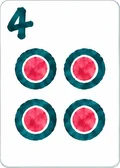
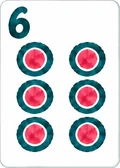
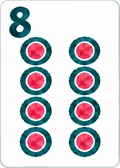
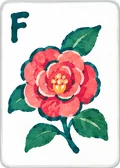
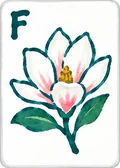
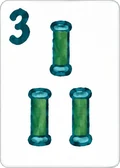

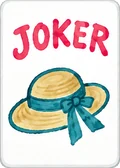
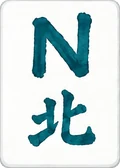
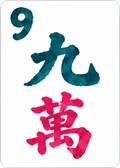
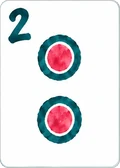
Here, a line of even numbers looks promising. The pairs of 2 Dots and 6 Dots point that way, with the 4 and 8 Dots close by. The tiles that fit least are the lone North wind and the odd numbers in other suits: the 3 Bam, 5 Crak and 9 Crak. Any three of those make a sensible first pass. Keep the joker and the Dots, and hold the flowers while you find out whether your line uses them.
After every pass, look again at what came in. The tiles you hold more than one of are your best clue. For more on picking lines, see how to read a mahjong card and our strategy for beginners.
How does the Charleston work with three players?
Everything above is for four players, the usual American Mahjong table. With fewer players, there’s no single way everyone plays.
- Three players. Some teachers say a three-player game has no Charleston at all. Other tables play their own house version. House rules vary, so agree on it before the first deal.
- Two players. The two-player game, called Siamese Mahjong, has no Charleston. Some players like an optional courtesy pass before play starts instead.
Read more in our guide to three- and two-player mahjong. A Mahj Call practice table always seats four: you and three computer players, so you can play the full Charleston whenever you like. Looking for a fourth at a real table? Find mahjong near you.
Questions
What is the order of the Charleston in mahjong?
The first Charleston goes right, across, then left, three tiles each time. If everyone agrees, a second Charleston goes the other way: left, across, then right. After that, you and the player across may make a courtesy pass of zero to three tiles. Then East starts play by discarding a tile.
Can you pass jokers in the Charleston?
No. Jokers can never be passed in the Charleston or in the courtesy pass. That’s a rule, not advice, and you’d want to keep them anyway, since they’re the most useful tiles in the game. Flowers are different: you may pass a flower, though some players hold them while they decide on a line.
Can one player stop the second Charleston?
Yes. The second Charleston happens only if every player agrees. If any one player says no, the Charleston ends after the first three passes and the table moves on to the courtesy pass. Once a second Charleston starts, though, all three of its passes must be made.
What is a blind pass in mahjong?
A blind pass lets you keep your own tiles by sending on some of the tiles coming to you, without looking at them. It’s allowed only on the last pass of each Charleston: the first left and the second right. Your pass still adds up to three tiles.
How does the courtesy pass work in mahjong?
After the Charleston, you and the player across each offer a number from 0 to 3. You both swap the smaller number, so if either of you offers 0, nothing changes hands. The other two players do the same with each other. Jokers can’t be passed in the courtesy pass.
Is there a Charleston with three players?
There’s no single agreed rule. Some teachers say a three-player game has no Charleston at all, and other tables use their own house version. The two-player game, called Siamese Mahjong, has no Charleston. Agree with your group before the first deal, so nobody is surprised halfway through.