Reading the card
How to read a mahjong card
A mahjong card lists every hand you’re allowed to win with, written in a short code. Each digit or letter is one tile, the ink colors show which groups share a suit, and the C or X beside a line tells you whether you may call discards for it.
What is a mahjong card?
In American Mahjong you win by being the first to hold 14 tiles that match one line on the card. That’s called Mahjong. The card lists the hands you’re allowed to build, and everyone at the table uses the same one.
A new card comes out every year, and its hands change. The card is published by the National Mah Jongg League. Mahj Call is independent and isn’t affiliated with the League; it plays this year’s hands and checks your tiles against them for you.
Each row on the card is a line, and every line has three parts:
- The tiles, written as numbers and letters, in color.
- A short note that tells you how much choice you have.
- A point value, with a C or an X beside it.
Lines come in families
The card groups its lines by theme, into sections or families. Knowing them helps you spot which lines your tiles lean toward. Families include:
| Family | What its lines use |
|---|---|
| Even numbers | Only 2s, 4s, 6s and 8s |
| Odd numbers | Only 1s, 3s, 5s, 7s and 9s |
| Runs | Numbers in a row, like 3 4 5 |
| Like numbers | The same number in different suits |
| Winds and dragons | The four winds and the three dragons |
| Threes, sixes and nines | Only 3s, 6s and 9s |
| Year lines | The card’s year, written in tiles |
What do the numbers and letters on a mahjong card mean?
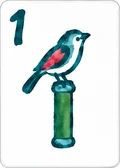
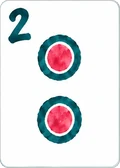
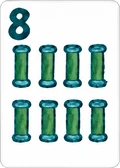
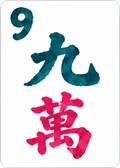
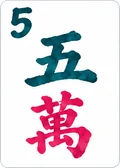
Every digit and every letter on the card is one tile. The digits are the numbered tiles of the three suits, Bams, Craks and Dots, which each run from 1 to 9. A run of the same digit or letter is one group. So 111 means three 1s, and 2222 means four 2s.
| On the card | What it means |
|---|---|
| 111 | Three of the same number: a pung |
| 2222 | Four of the same number: a kong |
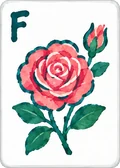
| F | A flower. FF is a pair of flowers, and any two will do. |
| D | A dragon. DD is a pair of dragons, DDD a pung. |
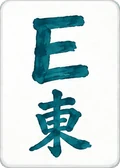
| N, E, W, S | North, East, West and South. NEWS means one of each wind. |
| 0 | The white dragon, used as a zero |
The group sizes have names: a pair is two identical tiles, a pung three, a kong four and a quint five. There are only four of each tile, so a quint always takes a joker, unless it’s flowers. There are eight flowers, and any flower matches any other.
New to the tiles themselves? Start with the American Mahjong tiles.
How do you read a line on the card, step by step?
Read a line left to right, one group at a time. Here’s a practice line from the Mahj Call lessons, taken apart. It’s our own example, not a line from this year’s card.
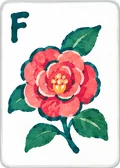
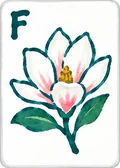
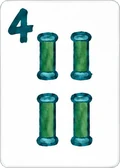
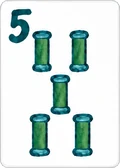
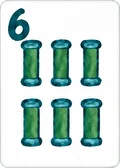
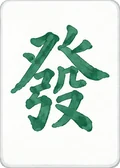
- FF: a pair of flowers. Any two will do.
- 444: three 4s, a pung.
- 555: three 5s, in the same suit as the 4s.
- 666: three 6s, in that same suit.
- DDD: three dragons that match the suit. The numbers here are Bams, so the dragons are green.
Count them: 2 + 3 + 3 + 3 + 3 = 14. Every line adds up to exactly 14 tiles. And how do you know the 4s, 5s and 6s share a suit? The colors tell you.
What do the colors on a mahjong card mean?
The card prints each group in a color. The colors show how the suits in a line relate:
- Same color, same suit. Groups in one color all come from one suit.
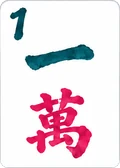
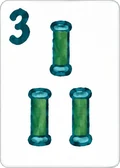
- Different colors, different suits. Groups in different colors must use different suits.
- The color never names the suit. Any suit can fill a color.
Flowers and winds belong to no suit, and neither does a 0 in a year line. The color rule is about the numbers and the dragons.
One color, one suit

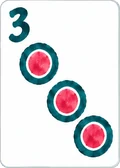
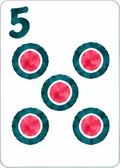
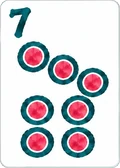
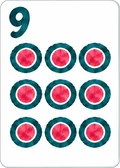
Three colors, three suits
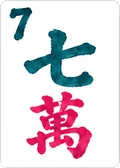
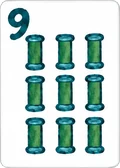
| Group | Printed in | Suit in this example |
|---|---|---|
| 111 | First color | Craks |
| 333 | Second color | Bams |
| 555 | Third color | Dots |
| 777 | First color | Craks |
| 99 | Second color | Bams |
111 and 777 share a color, so they share a suit. Three colors, three different suits. A line printed in two colors uses exactly two suits, however many groups it has.
How do dragons match the suits?
Each dragon belongs to a suit:
- Red dragon goes with Craks.
- Green dragon goes with Bams.
- White dragon, nicknamed Soap, goes with Dots.
When a line has dragons, the card asks for them in one of three ways:
- Matching: the dragon of the same suit as the numbers, printed in the same color.
- Opposite: a dragon from a different suit, printed in a different color.
- Any dragon: when the line’s note says any dragon, any of the three will do.
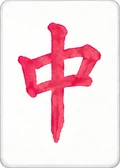
When 0 means zero
Year lines spell out a year in tiles, and the white dragon stands in for each 0. As a zero, Soap belongs to no suit, so it doesn’t make the line Dots. Used as a dragon, it still goes with Dots.

What does the note after each line mean?
Each line ends with a short note in small print that tells you how much choice you have:
| The note says | What it means |
|---|---|
| One suit | Every group in the same suit |
| Three suits | Each color a different suit |
| These numbers only | Use exactly the numbers shown, with no swapping in others |
| Any run | Any numbers in a row will do, like 3 4 5 or 6 7 8 |
“These numbers only” ties you to the printed numbers. “Any run” lets you choose where the run sits.
What do X and C mean on a mahjong card?
Beside each line’s point value is a C or an X. It tells you whether you may call discards for that line. To call a discard is to claim the tile another player has just thrown away.
- X means exposed. You may call discards to finish groups of three or more. Called groups go face up and stay there for the rest of the hand.
- C means concealed. You build the whole hand from your own draws. The only tile you may call is the very last one, the tile that gives you Mahjong.
Concealed lines are usually worth more points, because they’re harder to finish. Calling is faster, but every exposed group shows the table what you’re building.
More in calling discards and exposures.
Where can jokers go in a line?
Jokers aren’t written into a line, but they can fill in for some of its tiles:
- A joker can stand in for any tile in a group of three or more of the same tile: a pung, a kong or a quint. That includes flowers.
- A joker can never go in a pair, a single tile, a run like 1 2 3, or NEWS. Those need the real tiles.
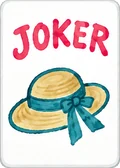
When you read a line, notice its pairs and singles. Jokers can’t fill them, so you’ll need the real tiles. More in American Mahjong joker rules.
Which line on the card should a beginner pick?
While you’re learning, favor lines worth fewer points. They’re usually easier to finish. Lines that let you use any suit, or that are marked X, are friendlier than concealed ones.
- Look for clusters. Pairs, pungs and numbers that sit close together. Tiles you hold more than one of are the best clue.
- Find the family. Lots of even numbers point to the even lines.
- Keep two or three lines in mind. Let the Charleston, the tile trading before the first turn, and the first few turns decide.
- Switch if a line fades. If the tiles it needs keep showing up in the discards, move to a backup.
In Mahj Call, the Coach shows the lines your tiles are closest to and what each still needs. More in American Mahjong strategy for beginners.
Questions
What do the colors mean on a mahjong card?
Colors show how the suits in a line relate. Groups in the same color come from the same suit, and groups in different colors come from different suits. The color never names a suit, so any suit can fill it. Dragons have suits too: red goes with Craks, green with Bams and white with Dots.
What does X and C mean on the mahjong card?
X means exposed: you may call discards to finish groups of three or more, which then go face up. C means concealed: you build the hand from your own draws and may call only the very last tile, for Mahjong. Concealed lines are usually worth more points.
What does 0 mean on a mahjong card?
A 0 is the white dragon, nicknamed Soap, used as a zero in year lines. As a zero it belongs to no suit, so it doesn’t make the rest of the line Dots. Used as a dragon, the white dragon goes with Dots.
What do F, D and NEWS mean on a mahjong card?
Each letter is one tile. F is a flower, and any flower matches any other. D is a dragon; the line’s colors and note tell you which one. N, E, W and S are the four winds, and NEWS means one of each. Jokers can’t stand in for NEWS.
Do you need a new mahjong card every year?
Yes. A new card comes out every year and its hands change, so everyone plays from this year’s card. Reading it stays the same: digits and letters are tiles, colors show suits, and the C or X says whether you may call discards. Mahj Call plays this year’s hands.