The rules
American Mahjong Joker Rules, Explained
A joker can stand in for any tile in a group of three or more of the same tile, but never in a pair, a single or a run. On your turn, you can also trade the real tile for a joker in anyone’s exposed group, your own included.
American Mahjong joker rules at a glance
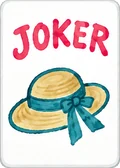
There are eight jokers in an American Mahjong set. They’re wild, which means a joker can take the place of another tile. They’re also the most useful tiles in the game. The rules in short:
- Groups of three or more only. A joker can stand in for a tile in a pung, a kong or a quint.
- Never in a pair or a single. Not in a run of numbers or in one of each wind, either.
- A quint needs a joker. There are only four of each tile, so five of a kind takes at least one. Flowers are the exception.
- You can trade for an exposed joker. On your turn, give the real tile it stands for and take the joker. This works on any exposed group, your own included.
- A discarded joker is dead. No one can call it.
- Jokers are never passed. Not in the Charleston, and not in the courtesy pass.
Where can you use a joker?
A joker only stands in for a tile in a group of three or more of that same tile. Winning hands are built from groups: a pair is two of the same tile, a pung three, a kong four and a quint five.
| Group | Tiles | Can a joker fill in? |
|---|---|---|
| A single tile | 1 | No |
| Pair | 2 | No |
| A run, like 1 2 3 | Single tiles | No |
| One of each wind | Single tiles | No |
| Pung | 3 | Yes |
| Kong | 4 | Yes |
| Quint | 5 | Yes, and it needs one, unless it’s flowers |
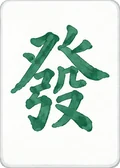
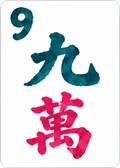
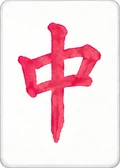
So a joker and two red dragons make a pung of red dragons. Three 2 Craks and a joker make a kong of 2 Crak. The joker takes on the identity of the real tiles in its group.
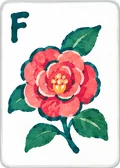
Jokers work for flowers too. The eight flowers have different pictures, but any flower matches any other, so a joker can stand in for a flower in a group of three or more.
Can you use a joker for a pair or a single?
No. A joker can never be part of a pair, and it can never stand in for a single tile. New players often trip over this one.
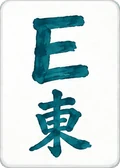
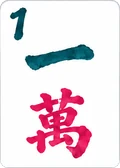
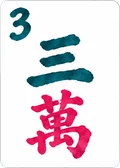
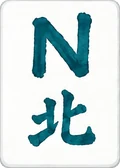
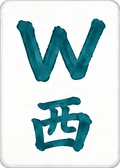
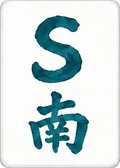
The same goes for any part of a line made of single tiles. A few lines ask for a run, like 1 2 3 in one suit. Others ask for one of each wind: North, East, West and South, which players call NEWS. Every tile in those has to be the real one.
Why does a quint need a joker?
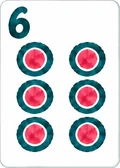
A quint is five of the same tile. A set has only four of each number tile, each wind and each dragon, so five of a kind always takes at least one joker.
Flowers are the exception. There are eight flowers, and any flower matches any other, so a quint of flowers needs no joker at all. A joker can still fill in a flower group if you’re short.
You can call a discard for a quint too: hold four and call the fifth. Unless it’s flowers, at least one of your four will be a joker.
How does a joker exchange work?
An exposed group is one a player has laid face up after calling a discard. When a joker sits in an exposed group, you can trade for it. Give the exact tile the joker stands for, and the joker comes to your rack. Players call this a joker exchange, a joker swap or redeeming a joker.
- Wait for your turn. Draw from the wall, or call a discard.
- Look at every exposed group on the table. Yours count too.
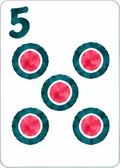
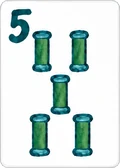
- Find a joker you can match. You need the exact tile it stands for. A joker in a pung of 5 Bam takes a 5 Bam and nothing else.
- Make the trade. Your real tile goes into the group, and the joker goes into your rack.
- Finish your turn. Discard one tile as usual.
A few details matter:
- It’s always on your turn. After you draw or call, and before you discard. You can’t trade on someone else’s turn.
- Any exposed group works, your own included. If you exposed a pung with a joker in it and later draw the real tile, you can swap it in and take your joker back.
- No one can refuse. If you have the right tile, the joker is yours.
- You give a real tile. You can’t trade one joker for another.
Can you use jokers when you call a discard?
Yes. When another player throws a tile you need, you can call it to finish a group of three or more, and jokers from your rack can fill in that group.
Say another player throws a 5 Bam. You hold one 5 Bam and a joker. Call the discard, and the three tiles make a pung. A pung needs two tiles of yours, a kong three and a quint four, and jokers can make up some of them. The group always includes the real tile that was thrown.
The called group stays face up in front of you for the rest of the hand. That puts your joker on show: any player with a 5 Bam can trade for it on their turn.
You can’t call a discard for a pair or a single tile, unless it’s the very last tile you need for Mahjong. Calling discards and exposures covers the rest.
Can you pick up a discarded joker?
No. You’re allowed to discard a joker, but it’s dead the moment it lands. No one can call it: not for a pung, not for a kong, and not even for Mahjong.
A thrown joker can’t help anyone, you included. The usual advice is simple: hold on to your jokers. They’re the most useful tiles in the game.
Can you pass a joker in the Charleston?
No. The Charleston is the trade before play begins: everyone passes three tiles at a time, to the right, across and to the left. You can’t pass a joker on any of those passes, or in a second Charleston.
The same goes for the courtesy pass, the optional swap of up to three tiles with the player across from you once the Charleston is over. No jokers there either.
The Charleston guide walks through every pass in order.
What is a jokerless hand?
A jokerless hand is a winning hand with no jokers in it. Tables that keep score often reward it. A common custom is that every other player pays the winner double.
There’s one exception. A few lines on the card are built only from pairs and single tiles, so jokers were never allowed in them anyway. Winning one of those earns nothing extra for having no jokers, because its value on the card already allows for that.
Scoring varies from table to table, so ask how yours pays before you start.
Questions
Can a joker be used as a pair in mahjong?
No. In American Mahjong a joker can never be part of a pair, and it can’t stand in for a single tile either. Jokers only work in groups of three or more of the same tile: a pung, a kong or a quint. A pair has to be two real tiles, like two 7 Dots or any two flowers.
Can you swap a joker on someone else’s turn?
No. A joker exchange only happens on your own turn, after you draw from the wall or call a discard, and before you discard. On your turn, you can give the exact tile a joker stands for and take the joker from any exposed group on the table, including your own.
Can you take a joker back from your own exposure?
Yes. The joker exchange works on every exposed group, your own included. If you exposed a pung of 5 Bam with a joker in it and later draw a 5 Bam, you can swap it in on your turn and take the joker back. Until then, anyone holding a 5 Bam can trade for it on their turn.
Can a player refuse a joker exchange?
No. If it’s your turn and you hold the exact tile a joker stands for, the joker is yours, and the other player can’t say no. Keep that in mind when you call a discard with a joker in the group: the joker is now face up, and anyone with the right tile can take it.
How many jokers are in an American Mahjong set?
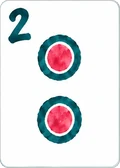
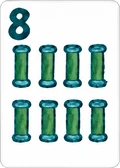
There are eight jokers in a set of 152 tiles. The rest are three suits numbered 1 to 9, four of each, plus the winds, the dragons and eight flowers. Jokers are the most useful tiles in the game, so keep every one you get.
Can you call Mahjong after a joker swap?
Yes. If the joker you trade for completes your hand, you can declare Mahjong on that same turn, before you discard. All fourteen of your tiles need to match a line on the card, and jokers still count only in groups of three or more, so a joker can’t finish a pair.