At the table
Mahjong etiquette: table manners for beginners
Good mahjong etiquette comes down to a few habits: name every discard out loud, call or let a tile go while it’s live, ask before you swap for a joker, and keep advice to yourself unless the table has asked for it. Here’s what’s a rule, what’s custom, and how to handle a mistake kindly.
What is mahjong etiquette?
Mahjong etiquette is the set of habits that keep a game fair, friendly and easy to follow. Some of it is the rules. Most of it is custom, and customs differ from table to table.
The short version:
- Say every discard out loud as you lay it face up in the middle.
- Call or let it go while the tile is live, and say “pause” if you need a moment.
- Draw your tile and put it on your rack right away on your turn.
- Ask for a joker swap. Name the real tile you’re offering and ask for the joker.
- Don’t talk about anyone else’s hand while it’s being played.
- Keep your rack as it is until a Mahjong has been checked.
- Agree on house rules before the first hand, not in the middle of one.
What should you agree on before you play?
Most table arguments start with a house rule nobody mentioned. Settle these before anyone mixes the tiles and builds the wall:
- The tiles. The standard game uses 152 tiles. Some tables add extra jokers and blank tiles as a house rule.
- How long a pause can last. That’s up to each table.
- What a dead hand does next. Tables differ, so agree on it now (more on dead hands below).
- Scoring. Plenty of groups keep no score at all. Others keep points or play for small stakes.
Bring this year’s card if your host asks; guests usually bring their own. The card is the list of hands you’re allowed to win with, and each hand on it is called a line. A new card comes out every year.
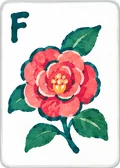
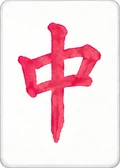
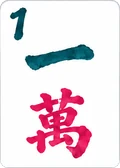
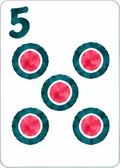
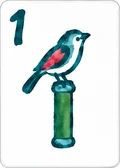
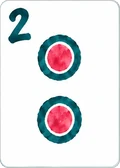
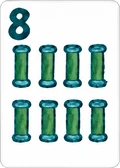
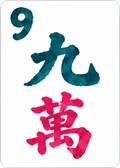
If the set is new to you, look over the tiles first so you can tell the suits, flowers, dragons and jokers apart.
Charleston etiquette: how to pass politely
The Charleston is the tile trade before the first turn. Remember two rules: each Charleston pass is exactly three tiles, and jokers are never passed, not even in the courtesy pass that follows it.
The rest is about keeping the table in step:
- Wait for everyone. Don’t rearrange for the next pass until every player has received this one. Some groups ask that nobody picks up until everyone has passed.
- Take “no” gracefully. A second Charleston happens only if every player wants it. Any one player can stop it, and no one should be pressed to change her mind.
- Don’t peek on a blind pass. On the first left pass and the second right pass, you may send on some of the tiles coming to you without looking at them. You still pass three in all. Keep it that way.
- Say your number in the courtesy pass. That’s an optional last swap with the player across, after the Charleston ends. You each say how many tiles you’ll swap, from none to three. You both swap the smaller number. Accept it without fuss.
The full pass order is in our Charleston guide.
Why do you say your discard out loud?
Each normal turn ends with a discard: you lay one tile face up in the middle of the table and say its name. This isn’t chatter. It’s part of play.
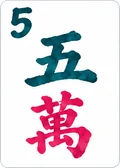
Naming the tile tells players who are studying their own rack or card what just went down. Without it, someone may miss the very tile she needed.
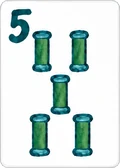
- Say it clearly, number first, then suit: “7 Dot”, “2 Bam”. Winds, dragons and flowers go by their names.
- Put it where everyone can see it, face up in the middle.
- A discarded joker is called “joker”. It’s dead the moment it lands, and no one can call it for anything.
How do you call a tile without holding up the game?
The newest discard is the live tile. Anyone who needs it to finish a group of three or more of the same tile, or to finish Mahjong, may call it, but only until the next player draws from the wall. After that it’s dead for the rest of the hand.
- Need a moment? Say “pause”. Say it promptly, before the next draw. It doesn’t commit you to calling.
- Decide, then let play go on. Call the tile or pass as soon as you know.
- If you call, show it. Lay the called tile and your matching tiles face up on top of your rack. That face-up group is called an exposure. Skip your draw, because the called tile takes its place, then discard as usual.
On your own turn, draw and rack your tile straight away. Racking means putting it on your rack, the stand that holds your tiles. Doing it promptly makes it clear the last discard is no longer live.
There’s no need to grab. If two players call the same tile, a call for Mahjong beats any other call. Between two calls of the same kind, the player whose turn comes first after the discarder gets it, however fast the other spoke. See our calling guide.
Can you touch other players’ tiles?
Your rack is yours, and theirs is theirs. Many tables ask that you never reach into another player’s rack or move her exposed groups. Exposed groups stay face up for the rest of the hand.
The one change anyone may make to an exposure is a joker swap. When a joker sits in an exposed group, you can give the real tile it stands for and take the joker. Ask for it politely:
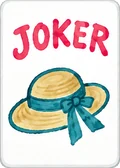
- Do it on your turn, after you draw or call and before you discard.
- Name the exact tile the joker stands for, and offer it.
- The trade can’t be refused. It works on any exposed group, your own included.
If someone misses a joker swap she could have made, don’t make anything of it. More in our joker rules guide.
Table talk: what to say and what to keep to yourself
Conversation is half the fun of a mahjong night. A few things are best left unsaid while a hand is being played:
- Don’t comment on another player’s hand. Not what she seems to be building, not her habits, not how she sorts her rack.
- Hold the coaching unless everyone agreed. Many tables ask that nobody coach mid-hand, because advice to one player changes the game for the other three. Teaching tables, where helping is welcome, are lovely. Just agree on it first.
- Onlookers stay quiet. Someone watching should never give away what they’ve seen in a player’s rack.
Holding on to a tile you think someone needs is fair play, not bad manners. Nobody owes anyone a winning discard.
Welcoming a beginner
Every regular was new once. Explain a word when you use it. Give a new player time to say “pause” and check her card. Never tease anyone for a slow turn, a missed joker swap or the way she sorts her tiles. A patient table is the one people come back to.
What happens if you make a mistake in mahjong?
Some mistakes make your hand dead, meaning it can no longer win this round. At a real table, the usual causes are:
- Calling Mahjong with a hand that doesn’t match a line on the card, often called a false Mahjong
- Exposing a group that fits no line on the card
- Holding the wrong number of tiles
A dead hand affects only the player who made the mistake. Everyone else plays on. What the dead player does next varies from table to table, so ask yours.
Groups handle other slips, like a misnamed tile, in their own ways. Agree before you start, and correct each other gently.
How do you declare Mahjong politely?
When your 14 tiles match a line on the card, say “Mahjong” and lay your whole hand face up on top of your rack. Then:
- Name the line you’ve matched on the card.
- Walk the table through it, group by group.
- Let everyone check it against their own card.
Everyone else keeps their rack exactly as it is until the hand has been checked. If it turns out to be a false Mahjong, the others can carry on only if their tiles are still in place.
If the wall runs out with no winner, that’s a wall game. No one wins, and the tiles are mixed for the next hand. Ready to play with real people? Find a mahjong table near you.
Questions
What are the basic rules of mahjong etiquette?
Say every discard out loud as you lay it face up. Call or pass while the tile is live, and say “pause” if you need a moment. Draw and rack promptly. Ask before taking a joker from an exposure. Don’t comment on anyone else’s hand, and agree on house rules before the first hand.
Do you have to say your discard out loud in mahjong?
Yes. Naming the tile as you lay it face up is part of play, not just politeness. It tells players who are looking at their own rack or card what was thrown, so nobody misses a tile she could call. Say the number, then the suit, like “5 Crak”. A discarded joker is called “joker”.
What does “pause” mean in mahjong?
Saying “pause” asks the table to wait before the next player draws, so you can look at your rack and card. It doesn’t commit you to calling the tile. Say it promptly, decide, then let the game move on. How long a pause may last isn’t fixed, so each table settles that for itself.
What happens if you call Mahjong by mistake?
A false Mahjong makes your hand dead: you can’t win that round. It affects only you, and the other players carry on, which is why everyone keeps their rack intact until a Mahjong has been checked. Tables differ on what a dead player does next, so ask yours before you start.
Is it rude to help another player during a mahjong game?
It can be, unless everyone has agreed to it. Advice to one player changes the game for the other three, so many tables ask that nobody coach mid-hand. Some groups play as teaching tables, where helping is welcome, so settle it before the first hand. Onlookers should never give away what they’ve seen in someone’s rack.
Can you take a joker from another player’s exposed tiles?
Yes, on your turn, after you draw or call and before you discard. Offer the exact tile the joker stands for and ask for the joker. The trade can’t be refused, and it works on your own exposed groups too. A joker that has been discarded can’t be taken by anyone.